A Letter for Families Who Want to Preserve the Well-Being of an Aging Loved One Losing Their Independence
There’s an invisible trap silently stripping away their independence… and no one has ever warned you about it.
Discover why emotional suffering speeds up dependency—and how to stop your loved one from declining before it’s too late.

Every year, thousands of seniors lose their independence.
So when it happens to your loved one…
Naturally, you search for the best way to preserve their well-being. Home care services. Help with meals. Assistance with daily tasks.
And yet, it’s not enough.
Because the real problem isn’t just the loss of autonomy… It’s the emotional upheaval it causes.
It’s the realization, day after day, that what was effortless yesterday… is now a struggle.
Getting out of bed, getting dressed, walking a few steps to the mailbox…
These once-simple actions become daunting challenges.
Little by little, they can no longer do anything without help.
This invisible suffering, easy to overlook at first, slowly eats away at their will to keep going.
And if this emotional distress is ignored, the situation can spiral much faster than you’d ever imagine.
At first, the signs are subtle.
The newspaper they used to love reading piles up, untouched. They start skipping meals, saying they’re not hungry. They forget a doctor’s appointment… then another.
You tell yourself it’s normal. It’s just aging.
Until one day, you realize it’s more than just forgetfulness.
One morning, they stay in bed a little longer. Then, one day, they don’t get up at all.
Not because they can’t… but because they no longer see the point.
And that’s when everything changes.
It’s not just aging that robs them of their independence.
It’s the weight of emotional suffering that comes with it.
The feeling of helplessness, loneliness, the fear of becoming a burden… Slowly, these emotions take a toll on their well-being, further weakening their health.
And the more this emotional pain is ignored, the more critical the situation becomes.

What could have been a manageable difficulty with the right support… becomes an insurmountable wall.
And it’s often at this point that you think: "If only I had acted sooner..."
But no one warned you.
You were told to monitor their health, to offer assistance.
But no one told you that what truly matters is ensuring both their physical well-being and emotional balance.
Because a senior who suffers emotionally becomes physically vulnerable.
And this is not your fault.
You’re already doing your best.
You’re there. You call them. You visit whenever you can.
But between work, children, and your own responsibilities, every day feels like a race against time.
And this burden shouldn’t rest solely on your shoulders.
Caring for an aging loved one isn’t just about making sure they eat or take their medication.
It’s about giving them a reason to get up in the morning.
And this is where traditional care services fail.
They address the visible needs—a nurse stops by, a caregiver prepares meals, an aide provides support for a few hours…
But no one takes care of what truly matters.
No one ensures that they maintain their emotional balance.
No one anticipates their needs before they turn into bigger problems.
And no one truly supports families in carrying this overwhelming emotional burden.
Right now, senior care operates as a series of temporary interventions.
A quick visit. Help in the moment.
But nothing provides a structured, long-term approach.
And that’s not enough.
Because every day without the right support speeds up their decline.
But there is another way.
A solution that goes beyond occasional visits—one that truly looks after your loved one’s entire well-being.
A system designed to protect both their physical and emotional health—so you can finally have peace of mind, knowing they’re in good hands.
In just a moment, you’ll discover why emotional well-being is crucial to your loved one’s health…
Why traditional care services fail to preserve it… and how you can offer them the support they truly need—without disrupting your daily life.
And in the next few minutes, you’ll realize that…
What’s often underestimated isn’t just the loss of independence itself… but the emptiness it creates.
Because beyond the daily tasks they can no longer do alone, their entire sense of identity starts to fade.
And when the will to live disappears… that’s when everything can take a turn for the worse.
Loss of Independence: An Overlooked Emotional Trauma
According to a Study Published by Ernesti:

But what’s most concerning is that these psychological struggles almost always go unnoticed.
The World Health Organization (WHO) has also sounded the alarm:

In other words: even when a senior is suffering internally, it’s common for no one to notice.
And so, the pain settles in.
It grows in silence.
And this is just the beginning.
Because this downward spiral doesn’t stop there.
Once set in motion, it follows a troubling pattern—well-documented by doctors, yet largely unknown to most families.
A phenomenon that, if not addressed in time, can cause a senior to decline within weeks.
Doctors Call It: The Sliding Syndrome
Defined by geriatric specialists as a “sudden withdrawal into oneself”, this syndrome leads to a rapid and irreversible deterioration of health.
The person loses all interest in their surroundings, and within just a few weeks, their physical condition collapses.

It’s a vicious cycle:
They isolate themselves.
Their body weakens.
They no longer have the energy to get up.
Their physical condition deteriorates even faster...
Until it’s too late to intervene.
Thousands of families face this every year… and they don’t know what to do.
Like this woman, who watches her mother disappear before her eyes:
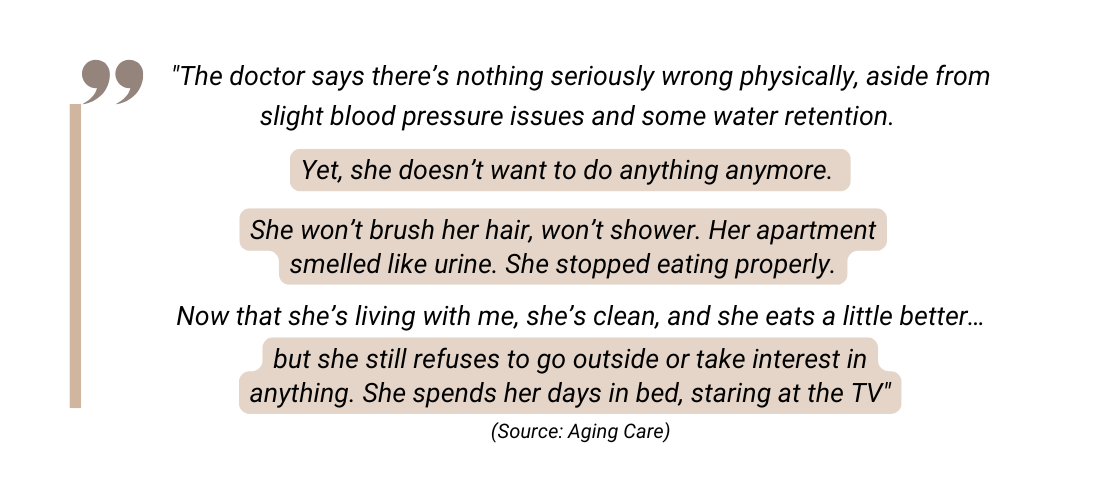
At first, you tell yourself it’s temporary.
That she’ll snap out of it.
But with each passing day, she drifts further away.
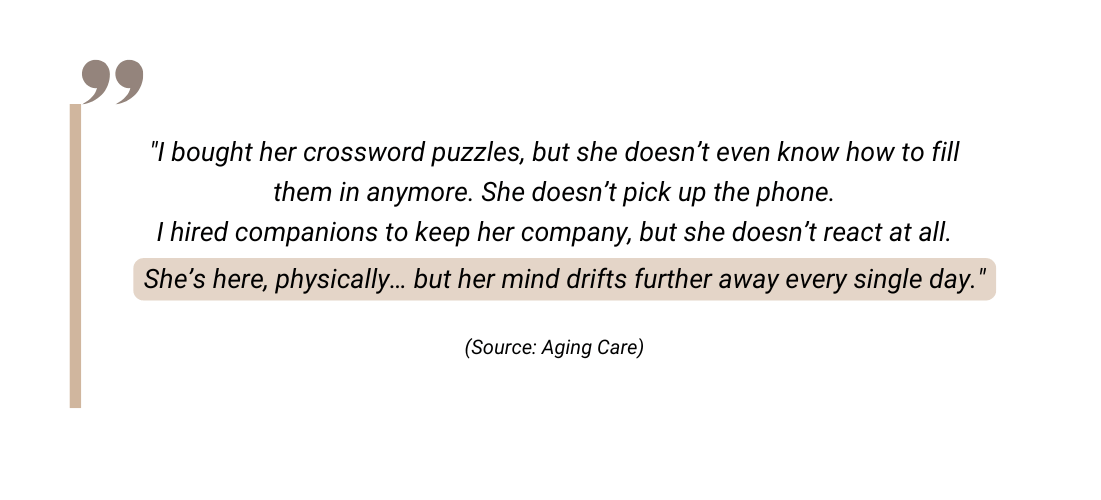
This is Sliding Syndrome.
It’s not just fatigue. It’s not just a loss of motivation.
It’s a loss of the will to live.
And by the time you realize it… it’s already too late.
When You Don’t Act in Time, the Consequences Are Irreversible
Some seniors, once caught in this downward spiral, never come back.
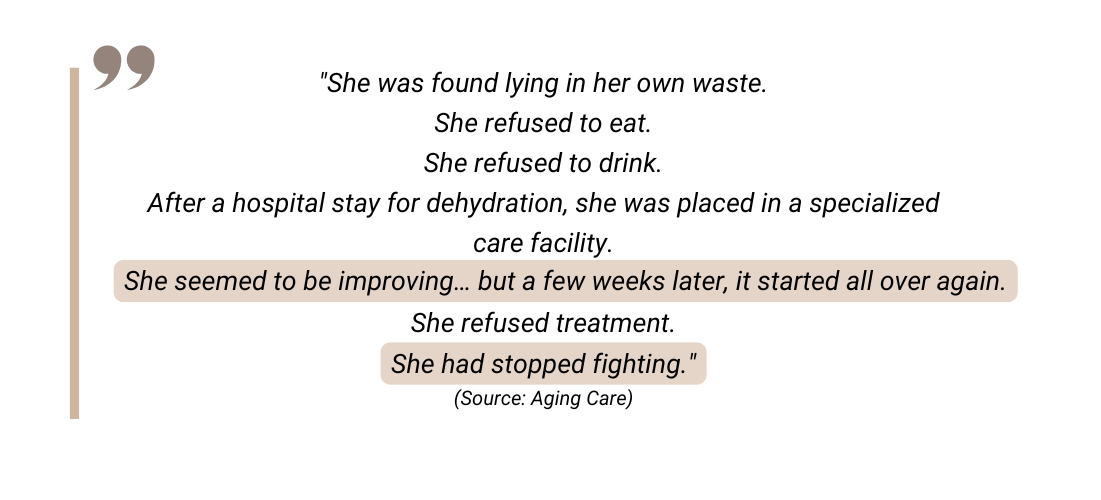
Sliding Syndrome doesn’t give warnings.
It creeps in gradually… until suddenly, there’s no turning back.
What starts as a simple withdrawal from the world quickly turns into rapid physical decline.
And before you know it, you’re facing a harsh reality:
Their condition has worsened so quickly… that nothing can be done anymore.
According to experts, over 80% of seniors affected by this syndrome pass away within a month if nothing is done to reverse the trend. But if you’re reading this now, it means all hope is not lost.
Because there is a way to stop this downward spiral.
A way to protect your loved one before it’s too late.
A way to preserve their well-being for longer—without feeling overwhelmed.
But this solution isn’t found in traditional home care services.
Because what truly makes the difference isn’t just having someone there to help them eat, dress, or move around.
What truly makes the difference is protecting their emotional balance.
Because when a senior feels good mentally, everything else follows.
Their mindset affects their energy, motivation, ability to engage with the world… and even their physical health.
On the other hand, when that balance is broken, it takes very little for things to spiral out of control.
A drop in motivation, a withdrawal from social life, a loss of interest in the world around them…
And little by little, their independence fades away.
So, to ensure your loved one never reaches that point…
You’re about to discover:
The 3 Essential Pillars to Preserve Their Independence and Prevent Their Decline
Why Some Seniors Stay Independent and Fulfilled…
While Others Lose Their Grip in Just a Few Years?
Research shows that those who maintain their independence follow three essential principles.
Dr. Olivier de Ladoucette, psychiatrist and geriatric specialist in aging, sums it up in one sentence:

These simple yet powerful principles hold the key to preserving a senior’s emotional well-being… and preventing their suffering from turning into a complete loss of autonomy.
But today, these crucial factors are often overlooked.
And that’s precisely what accelerates dependency.
When a loved one starts aging, our first instinct is to focus on medical needs.
We think about doctor’s visits, medications, and assistance with daily tasks…
But aging well isn’t just about avoiding illness.
It’s about taking action before small struggles turn into major problems.
Dr. de Ladoucette Reminds Us:

In other words: illness isn’t what causes dependency… it’s the lack of prevention.
Regular medical check-ups help detect problems before they escalate.
But that alone isn’t enough.
Because what truly speeds up the loss of independence is inactivity…
As they age, many seniors gradually reduce their physical activity.
They Move Less, Rest More…
Believing it will protect them.
But the truth is the exact opposite.
Dr. de Ladoucette states:

A senior who walks daily, stays active, and moves regularly maintains better health for longer.
Their muscles stay strong.
Their balance remains stable.
Their risk of falling decreases.
And for your aging loved one to stay active, they need emotional balance.
Because if they don’t feel well psychologically… They will avoid effort… And their condition could worsen over time.
That’s why emotional well-being is the driving force.
It provides the energy to keep moving forward.
But that alone isn’t enough.
The brain must be stimulated too.
Seniors who read, play games, or continue learning slow down cognitive aging.
They maintain mental sharpness that protects them from cognitive decline.

Stopping is opening the door to decline.
Staying active extends independence… and significantly improves the well-being of your aging loved one.
But even with physical and mental care, there’s one last factor that can jeopardize everything…
A factor often underestimated, yet essential to a senior’s well-being:
Staying Connected to Avoid Sinking into Loneliness
One of the Greatest Dangers of Aging: Isolation

When a senior finds themselves alone, they start to withdraw.
They talk less. They go out less.
And little by little, they lose their zest for life.
But isolation doesn’t just cause sadness—it accelerates both physical and mental decline.
Studies show that seniors who maintain an active social life: ✔ Stay healthier longer ✔ Have a more stable mood ✔ Retain better memory and mental clarity
On the other hand, loneliness leads to confusion and a higher risk of depression.
And once a senior starts isolating themselves… it becomes incredibly difficult to bring them back.
That’s why staying connected is just as vital as taking care of their physical health.
It acts as a shield against dependency. A key to preserving their emotional well-being.
But how can you manage all of this… when every day already feels like a race against time?
You know what needs to be done.
But between work, children, responsibilities… how can you possibly do it without exhausting yourself?
How can you ensure regular medical follow-ups, help them stay active, and encourage a fulfilling social life… when your schedule is already overflowing?
You want to be more present, to give them the attention they deserve…
But you also have your own life to manage.
And that’s the real problem.
Because most of today’s solutions only address part of the issue.
We Treat Diseases. We Follow Protocols.
But we forget the person as a whole.
This is exactly what a report from the National Library of Medicine criticizes:

Each professional handles only one piece of the puzzle—without ever looking at the full picture.
A doctor monitors blood pressure… but doesn’t check on their emotional state.
A home aide prepares meals… but doesn’t ask if they enjoyed eating.
A nurse administers treatments… but never inquires about their mental well-being.
The result?
Seniors are cared for… but not truly supported.
Their health is monitored… but their morale declines.
They receive occasional assistance… but still feel alone.
The core issue is that modern healthcare is designed to treat illnesses—not to preserve the emotional well-being of seniors.
A study published in the Journal of the American Medical Association highlights this exact problem:

One case from the study illustrates this perfectly:
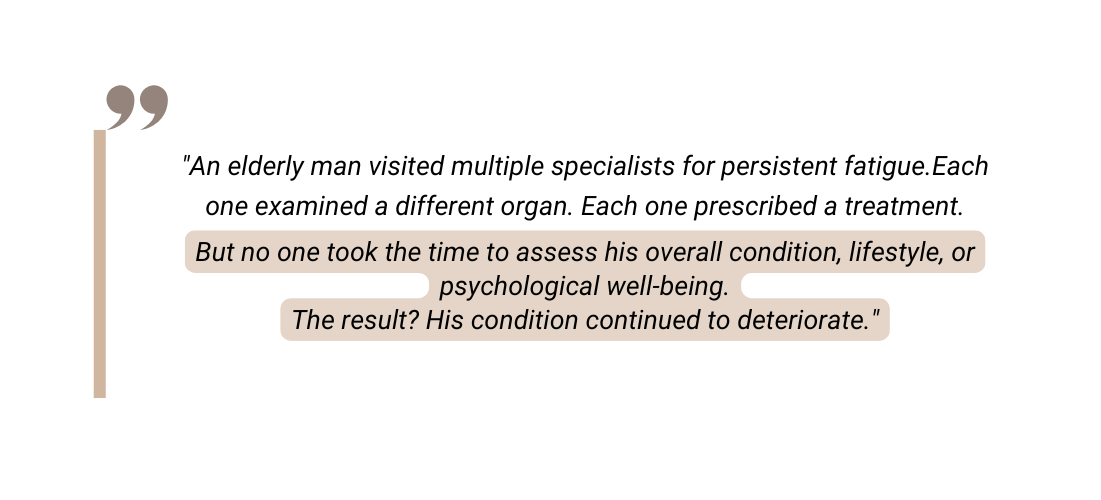
What does this mean?
Patients are treated like clients, and medicine is losing its humanity.
As Dr. William Osler, one of the founders of modern medicine, once said:
"It is more important to know what kind of person has a disease than to know what kind of disease a person has."
Yet today, too often, patients are no longer seen as people.
And this is precisely the problem with traditional home care services.
A caregiver may help them get up and dressed…
A nurse may check their blood pressure…
A home aide may prepare their meals…
But that’s exactly why occasional assistance isn’t enough.
Because losing independence isn’t just about needing medical care.
It requires a support system that nurtures both physical and emotional well-being.
It’s about a human-centered approach—one that sees the person before the illness.
It’s comprehensive support that addresses both critical pillars of well-being—without placing the entire burden on you.
If you’ve read this far, it’s probably because you’re looking for a real solution.
A solution that goes beyond technical care… and actually restores your loved one’s quality of life.
Because beyond treatments and protocols, it’s human connection that makes the difference.
A simple kind look. A genuine conversation. A moment where they feel heard, understood… and alive.
Sometimes, these small gestures are enough to reignite an inner spark that seemed lost.
And when that spark returns, everything changes.
The body follows the mind.
Energy comes back.
The desire to get up in the morning returns.
And while medicine can’t always heal everything… human connection can sometimes do what medicine cannot.
Today, I want to share a story with you—one that proves just how life-changing this can be.
I Know This Because I’ve Been Doing This for 25 Years.
My name is Cassandre Jean-Louis.
For years, I have cared for elderly individuals in hospitals, nursing homes, and private residences.
I’ve witnessed the good days—those moments when a surprise visit brought a radiant smile to their face.
And I’ve seen the dark days—when they withdrew into silence, when nothing seemed to matter anymore.
I’ve watched bodies weaken… but more than that, I’ve seen souls fade away.
One day, I was called to care for a terminally ill patient at home.
His doctor had given a clear prognosis: six months, no more.
My job was simple—ensure his basic care, keep him clean, make sure he took his medication, and keep him comfortable.
But I quickly realized that what he needed most wasn’t just medical care.
So instead of just following protocols, I took the time to know him.
I listened to his stories—the ones he still wanted to share.
I looked for ways to reignite the small joys of his everyday life.
I cooked his favorite meals.
I brought out old family photos, and for the first time in a long time, I saw his eyes light up.
I played his favorite movie, and he smiled.
Weeks passed. Then months.
And against all medical predictions, he began to regain strength.
He talked more.
He ate better.
His movements became more fluid.
Instead of counting the days, he started living them again.
The six months predicted by his doctors turned into a year. Then two. Then five.
That’s the moment I realized that home care could be so much more than just physical assistance.
It could be:
A space for life.
A source of energy.
A human connection that gives someone a reason to keep going.
But I also understood why so many seniors slip so quickly into dependency.
In traditional care services, every caregiver has a specific, limited role.
Everyone does their job… but no one ensures the continuity of their well-being.
So, I decided to go further.
Your Loved One Deserves More Than Just Basic Assistance… That’s Why We Created a Unique Approach Focused on Their Well-Being
One of the biggest misconceptions about senior care is believing that occasional assistance is enough to maintain their well-being.
But the truth is, it’s the little daily habits that give meaning to a senior’s life.
The morning coffee in the same spot… The daily walk… The favorite TV show watched at the same time each day.
These routines, which seem insignificant, are actually the foundation of their emotional balance.
But as independence starts to fade, so do these routines—and with them, the will to keep moving forward.
Little by little, they begin to withdraw.
They refuse an outing they would have accepted just months ago.
They pull away from conversations, speaking less and isolating themselves.
Soon, they spend long hours sitting still, as days blur together without a true reason to get out of bed.
And that’s exactly what we refuse to let happen.
That’s why we developed an approach that goes beyond simple assistance—one that actively works to preserve your loved one’s independence and emotional well-being by caring for every aspect of their daily life.
A Dedicated Well-Being Manager Watching Over Your Loved One Every Day
A Well-Being Manager does more than just follow a medical file or coordinate schedules.
Their role is to ensure that every day has meaning for your loved one.
They make sure their days aren’t reduced to a repetitive cycle of medical care.
That the small rituals that bring them comfort remain a part of their life.
That their daily routine is filled with moments that stimulate, soothe, and make them feel alive.
They encourage outings, maintain connections with family and friends, suggest engaging activities, and adjust their environment so they can continue enjoying what they love in complete safety.
Because aging should never mean fading away.
An Invisible Support System That Works Continuously
In most senior care services, every professional has a fixed, limited role.
A nurse comes for a treatment.
A home aide cleans the house.
A caregiver helps with dressing.
But no one ensures that everything works together smoothly.
Medical appointments pile up with no real coordination.
Doctor’s recommendations aren’t always followed.
Caregivers lack essential information to provide the best support.
The Result?
Families are left to handle everything themselves—endless phone calls, scheduling, last-minute issues… an overwhelming mental burden.
That’s Where Thenacares Comes In.
We take care of every aspect of your loved one’s support.
If you already have trusted healthcare professionals, we seamlessly coordinate with them.
We handle all communication, follow-ups, and scheduling, ensuring that every caregiver has the right information at the right time.
Need a specialist?
We also have our own network of healthcare professionals.
In Practical Terms? You Have Nothing Left to Manage.
No more searching for doctors or nurses.
No more struggling to coordinate schedules.
No more endless phone calls.
Everything is fully organized so your loved one receives the best care possible—without the stress falling on you.
A Well-Being Manager Overseeing Every Step of the Care Process
The Well-Being Manager ensures that every aspect of your loved one’s care runs smoothly.
They adjust treatments and interventions based on doctors' recommendations.
They make sure that every appointment, every treatment, and every need is properly addressed.
They anticipate risks to prevent minor issues from turning into emergencies.
But their role goes far beyond just organizing.
They monitor, adapt, and provide continuous support to your loved one every day.
Because true care isn’t just about adding more services.
It’s about creating a structured, proactive support system that ensures your loved one’s well-being—with complete peace of mind.
Today, You Have the Opportunity to Give Your Loved One the Kind of Care Few Families Even Know Exists.
You can provide them with personalized support, designed not only to protect their physical health, but also to maintain their emotional balance—so they never feel like just another patient in a routine cycle of care.
But the most important thing is to act now, before the situation spirals out of control.
Because senior care is at a turning point.
With the aging population, demand is skyrocketing… and the infrastructure isn’t keeping up.
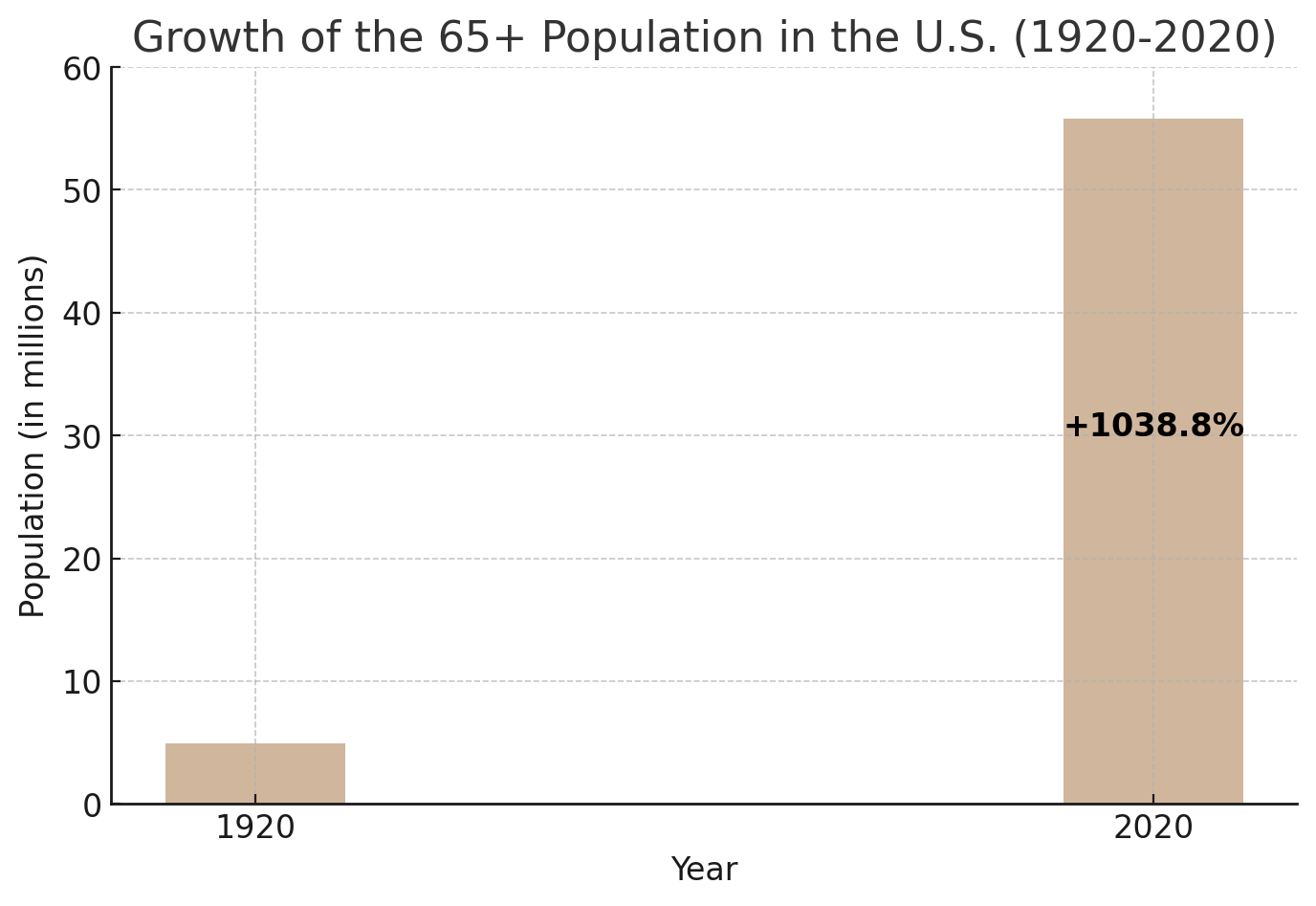
According to the Census Bureau, the 65+ population in the United States grew from 4.9 million in 1920 to 55.8 million in 2020, increasing more than tenfold over a century.
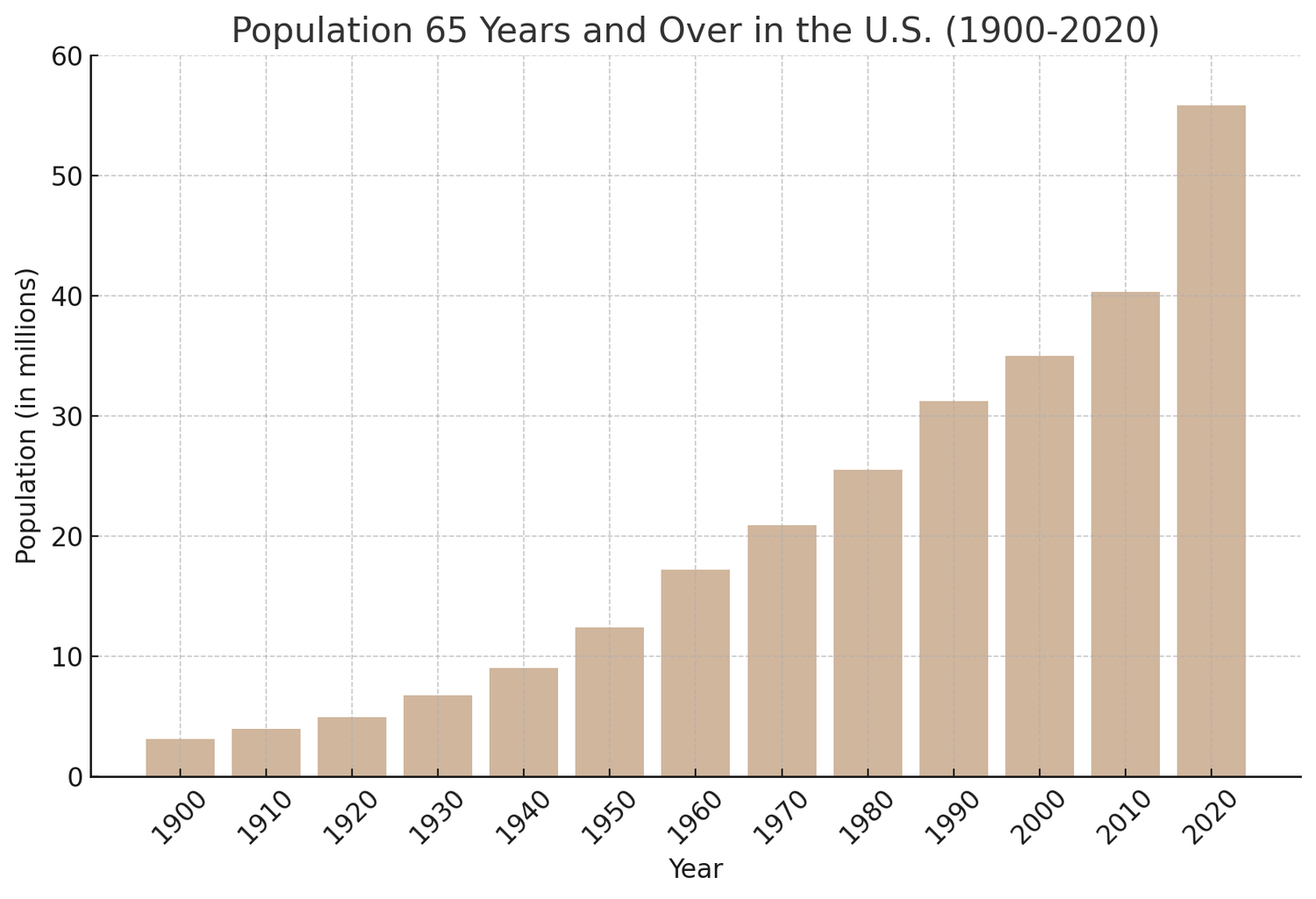
A Surge of Over 1,000% in Just a Century.
The Consequence?
A Bipartisan Policy Center report reveals:

Home care services are struggling to recruit, and the shortage of qualified professionals continues to worsen.
The Bureau of Labor Statistics projects a 21% increase in home care job demand by 2033—a clear sign of an alarming workforce gap.
Many families will find themselves left to manage everything on their own—juggling work, responsibilities, and the anxiety of not being able to provide their loved ones with the care they deserve.
And in this growing crisis, those who don’t plan ahead risk being left without a solution.
That’s Why We Made a Radical Choice.
Due to the severe shortage of caregivers…
We have chosen to prioritize quality over quantity.
That’s why we are limiting this program to just 10 seniors.
Beyond this limit, we can no longer guarantee the level of excellence we stand for.
No overworked teams.
No impersonal care.
No diluted support.
Only a dedicated, high-quality approach, designed to preserve your loved one’s independence and well-being for as long as possible.
But once these 10 spots are taken… that’s it.
We cannot expand this program or exceed this limit.
In just a few weeks, this opportunity may no longer be available to you.
Your Loved One Deserves More Than Just Basic Assistance.
They deserve personalized care—designed to help them stay independent for as long as possible… before it’s too late.
If you want them to benefit from this, now is the time to act.
Here’s How We Can Help Starting Today:
Step 1: Fill Out Our Questionnaire
In just a few minutes, you’ll help us understand your situation and your loved one’s needs.
Step 2: Schedule a Free Call with a Care Advisor
Together, we’ll analyze the best solution to ensure their physical and emotional well-being.
Step 3: Receive a Personalized Care Plan
Once confirmed, we’ll handle everything—ensuring care begins within 7 days.
Who Is This Program For?
Our priority is to provide high-quality, dedicated support. That’s why we only work with seniors who meet these criteria:
✔ Your loved one requires at least 12 hours of assistance per day. ✔ You reside in Florida.
Don’t Wait…
With only 10 spots available, we expect to reach capacity quickly.
⬇ Click below to secure your spot before it’s too late ⬇
Here’s Everything You’ll Get Access To:
1. A Dedicated Well-Being Manager
✔ A single point of contact who oversees and coordinates all care services. ✔ Personalized monitoring to anticipate and address every need. ✔ Seamless communication with the family to relieve mental burden. ✔ A customized daily schedule designed with both the senior and their family to maintain emotional balance.
2. Medical Care Coordination
✔ Scheduling and reminders for medical appointments. ✔ Monitoring prescriptions and adjusting treatments in collaboration with doctors. ✔ Strict medication management to ensure proper intake.
3. Administrative & Social Support
✔ Assistance with social security paperwork and financial aid applications. ✔ Management of insurance claims and medical reimbursements. ✔ Centralization of medical documents for quick and easy access to essential information.
4. Emotional & Psychological Support
✔ Encouragement to maintain social connections (family calls, organizing visits). ✔ Support in engaging activities to promote mental well-being.
5. Complete Assistance with Daily Needs
✔ Hygiene & Personal Care: Bathing, grooming, skincare. ✔ Dressing Assistance: Choosing outfits, getting dressed. ✔ Meals & Nutrition: Help with meal preparation and feeding. ✔ Mobility Support: Safe assistance for moving around. ✔ Toilet & Continence Care: Support with restroom needs and medical devices if required.
All You Have to Do Is Click Below to Fill Out the Questionnaire
⬇ Reserve Your Free Call Now ⬇
If You’re Seeing This Page, It Means We Still Have Availability…
But once our 10 spots for this exclusive care program are filled, this opportunity will no longer be available.
This program is strictly reserved for seniors who require continuous assistance, ranging from 12 hours per day to full 24/7 care.
If your loved one is still largely independent or only requires occasional help, this offer may not be the right fit.
However, if you’re looking for comprehensive, personalized, and ongoing support, now is the time to act.
⬇ Check Your Loved One’s Eligibility Before It’s Too Late ⬇
Don’t Wait Until It’s Too Late to Take Action
Every day without the right care can accelerate the loss of independence.
Today, you have two choices:
Wait and hope that the situation doesn’t get worse… knowing that, at some point, it will be too late to act.
Take action now, give your loved one the care they truly deserve—going far beyond basic assistance—so they can maintain their independence and well-being for as long as possible.
The Decision Is Yours.
Right now, there’s still time to make a difference.
If you want your loved one to receive comprehensive, human-centered, and personalized support, now is the time to act.
⬇ Click below to fill out the questionnaire and schedule a free call with our team. ⬇

We are available — 24/7
Address:
9835 LAKE WORTH,
suite 16-376
LAKE WORTH, FLORIDA 33467
admin@thenacares.com
License #:
30212681
© THENACARES LLC, all rights reserved 2024
Subscribe here for free
We HATE spam. Your email address is 100% secure